- Local time
- Today, 13:58
- Joined
- Feb 28, 2001
- Messages
- 30,898
Not really, All.comedy that mocks others goes a long way in affecting the self esteem of people who are object of mockery.
Not that I actually dispute your statement, but have you studied the psychological underpinnings of humor? Let's take a modern commercial that uses humor because there is a point I wish to make.
The commercial shows two gazelles and they notice a lion coming in the distance. One of them puts on a pair of running shoes (I'll omit the brand name). The other says, "You know that you will never outrun that lion." The gazelle with shoes says, "No, but I only have to outrun you."
This is funny and exemplifies that a LOT of humor is depicted with a "there but for the grace of God go I" theme. We empathize with the slower gazelle and realize his fate, but are relieved to not be sharing it.
If you think of various ethnic, slap-stick, or situational humor, you realize that it offers up a hapless member of some ethnicity or other kind of group as a target of disaster, and the people who laugh at the joke are exhibiting schadenfreude, a feeling of relief or pleasure at someone else's misfortune. Go visit the "best jokes" thread on this forum, which has reached a prodigious number of jokes (some repetitious) including some of my better country and Cajun stories. If you can't detect at least some schadenfreude somewhere in that mess, you aren't looking close enough.
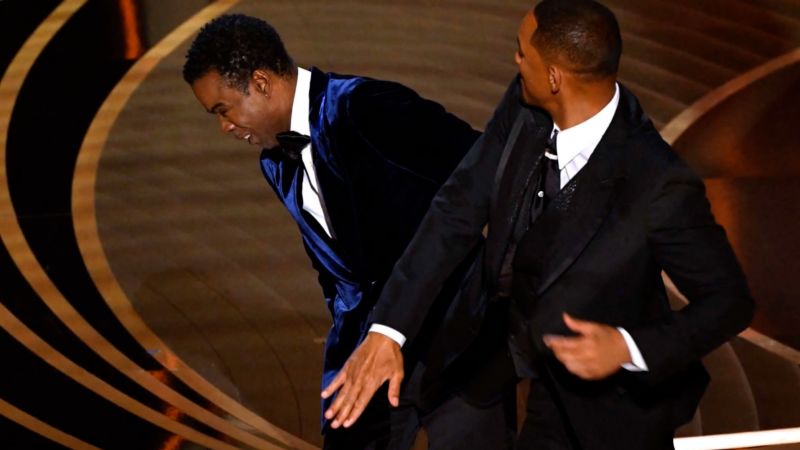
What is the difference between these putative ethnic jokes and Chris Rock's joke? His comment was aimed at a specific (and physically present) person, not at an absent arbitrary exemplar of some group. So the question relating to your comment is whether the mocking behavior relates to an actual person who could be the exemplar of something, or does it just mock an avatar of some group? If it it mocked an avatar, would Chris's comment have been objectionable? Because it mocked someone who was physically present, did it cross the line of insults?